Friday, May 29, 2015

What 'Bad Blood' Says About Taylor Swift's Departure from Country Music

Last year Taylor Swift released her first full-blownsies no-country pop album, 1989.  As someone who has listened to a lot of country, both good and bad, and has recently found an appreciation for the genre when done well I am always in favor of country artists experimenting with other genres, even if it means leaving them all together.  At least, I'm assuming I'm in favor of it.  As far as I know Taylor is the only person with the guts to leave country entirely.  When Garth Brooks tried to temporarily go alt-rock/pop he had to create an entirely new Australian identity.  Even with all that the Chris Gaines experiment is still seen as one of the biggest missteps in Brooks' career, which was at Swift-esque levels at the time.  1989 has certainly fared better than Garth Brooks in... The Life of Chris Gaines but no one is worried about Taylor Swift's career.  I'm only curious about her ties to country music and her own past.

Has anyone ever seen Chris Gaines and Taylor Swift in the same room?


As previously mentioned, I personally went several years without listening to much country music but I found a new respect for the form thanks largely to artists like Lydia Loveless.  Lydia grew up surrounded by country music before she spent a few years in the punk scene of Ohio.  Then she combined the two forms seamlessly, showing the creative potential for country music, garnering critical acclaim, and becoming one of my favorite musicians in the process (for what that's worth).  That's what I would like to see from Taylor.  She has clearly changed a lot over the past few years and I would like to see the new Swift merge with the old to create something entirely different and unique, but I think Taylor may be done with country for quite a while.

One significant difference between Swift and Loveless and Brooks is that Taylor has been inching towards pop for years.  Her 2012 album Red was noticeably more pop than country, featuring collaborations with hit making producer Max Martin.  Still, I never thought she would burn the bridge to country until the music video for 1989's "Bad Blood".  The basic concept of "Bad Blood" is getting Taylor's famous friends together so they can do cool action movie stuff and not one of those friends is a country singer.

It's not like there's a shortage of badass women in country music.  Miranda Lambert has built a career on strutting all cool like and burning things.  Recently she and Carrie Underwood robbed a bank together in their own action movie homage.  The only thing stopping Brandy Clark from killing her cheating beau is that she hates stripes and fifteen years earlier the Dixie Chicks decided it was worth the risk to take out a domestic abuser.  Around that time Shania Twain was in her own CGI sci-fi music video.  Before most of these women and the one's in "Bad Blood" (and some of them's parents) were even born Loretta Lynn was threatening to take homewreckers to "Fist City" and getting kicked off the radio for promoting contraception.  The first part especially might not be relevant to modern feminism but it was badass as heck.

Another country candidate for "Bad Blood" is Faith Hill, who might not have a lot of badass credential but Taylor named her song "This Kiss" as one of her biggest influences in Rolling Stone.  She emphasized the crossover appeal but it's still probably the most significant acknowledgement of her country past that Taylor has made in a year or more.  Make no mistake, Taylor's past was full of country.  Her first hit was named after Hill's husband and fellow country superstar Tim McGraw.  Her first album is full of rural imagery like screen doors and pick up trucks.  On her third album's "Mean" she even threw in a little bluegrass.

In that song Taylor revealed that her ambition was to live in a "big ol' city," because staying in the styx isn't good enough.  This is probably the least country thing about Taylor Swift.  Country singers tend to love the country and despise the city.  It's one of the most frustrating cliche's of the genre.  For instance, "Homeboy" from Eric Church's otherwise excellent album Chief the city is associated with "hip hop hats," saggy pants, and cussing at and physically accosting your parents while the country is associated with trucks and beer and high school sweethearts.  If the only way Taylor can grow as an artist is to leave overly simplistic stereotypes like that behind than I only look forward to what comes next.  However, in my experience country can be much more complex than that.  It can be a Gaga-esque ode to self love, or political (and not necessarily conservative), or personal and passionate, or, believe it or not, even upbeat and cheerful.  It would be a shame if country loses Taylor Swift forever but it will be alright without her.

Friday, May 22, 2015

Highlights of Pottermore

Between my anticipation for Avengers: Age of Ultron and my excitement about the news of DC's Legends of Tomorrow and Supergirl coming later this year I've written about superheroes for the last thirteen weeks in a row.  I like superheroes a lot but I never wanted this blog to have a single theme so now might be the time to try something different.  I'm not going to talk about superheroes at all no matter how extraordinary the finale of The Flash was.  Clearly, instead of writing about entertainment I like I should do something completely different.  I have to talk about my personal life and describe my emotions in intimate detail.  I should do that, but if I do I will be incredibly uncomfortable for the next decade.  Instead I'm just not going to talk about superheroes.  I'm going to talk about Harry Potter.


Over the past year give or take I've been slowly reading the entire series again for the I-lost-count-several-times-ago time.  I have also been exploring the website Pottermore as I go.  Pottermore is made up of interactive illustrations from important scenes and a couple of game type things.  The most interesting part is the new writing from J.K. Rowling that gives backstory on some of the characters who have always been interesting but their entire bios couldn't fit in the books like these three.

Minerva McGonagall


For most of the series the audience only sees Professor McGonagall as a strict but caring schoolmarm.  In her Pottermore bio her trouble childhood is revealed as well as her dashed hopes and dreams a young woman.  Minerva's mother was a witch and her father was not.  The strife caused by the conflict of the two worlds had an impact on Minerva and plagued own romantic relationships.  While she was a student at Hogwarts Minerva proved to be an adept Quidditch player, which explains why she was so invested in the sport as to suggest Harry join the team in his first year at school instead of punishing him for something that he definitely should have been at least scolded for.  She worked at the Ministry of Magic before returning to Hogwarts as a teacher.  Rowling also revealed that the name Minerva comes from the Roman goddess of wisdom and McGonagall comes from a famously bad poet.

Dolores Umbridge


Similar to McGonagall, Umbridge was born to a wizard and a Muggle woman.  However, Minerva was close to her Muggle father whereas Dolores despised her mother and cut all ties to her as soon as possible.  She also joined the Ministry after leaving Hogwarts where she weaseled her way to the top of the food chain.  The only things that surpassed her hatred and maliciousness was her ambition.  When she was placed in charge of Hogwarts she believed herself finally free of restrictions and able to be as cruel as she wanted.  Rowling explained that Umbridge was loosely based on a teacher she had, but admitted that where Harry had very valid reasons to hate Dolores, J.K.'s dislike had little to no legitimacy.

Remus Lupin


Lupin's backstory is one of the more dramatic, and perhaps Shakespearean, in the Harry Potter universe.  Lupin also had one magical parent and one Muggle parent.  However, they enjoyed a mostly happy marriage until his father peeved off a werewolf, never imagining that it would come after the child Remus.  His parents never expected that he could go to Hogwarts like a normal boy wizard but Headmaster Albus Dumbledore approached them and convinced them that Remus belonged at the school.  He was proven right when Remus found a close-knit group of friends and excelled at his school work.  However, Remus lost his friends in the war against Voldemort and spent the next decade or so alone.  He believed he would be alone forever until Voldemort returned and Remus rejoined the resistance, where he met his wife.  Rowling said that Remus was one of her favorite characters and acknowledged that his wolf condition was a metaphor for sexually transmitted diseases, which is just one of the many ways her books address prejudice.

Friday, May 15, 2015

7 DC Characters Who Should Be On TV (For Real This Time)

Last week I promised nine suggestions of characters that should be in the upcoming TV series DC's Legends of Tomorrow, but I only delivered two and a bad joke because I was coming up on my semi-rigidly self-imposed deadline and I'm kind of just a jerk.  Since then the trailer was released for the series along with the possibly-connected-but-probably-not Supergirl.  Both shows look great and remind me how cool it is that the golden age of television coincides with the golden age of live action superheroes.  Now I feel I should deliver on the promise in last week's list, but I stand by the previous entries.  Static would be a fantastic addition to any of DC's current TV series (except Gotham which I'm ignoring because I haven't watched it in months and it's definitely not connected to the other shows) and Mr. Mxyzptlk could work on Legends, Supergirl, or The Flash.


The Question

Legends of Tomorrow's parent show Arrow is far darker than any of its offspring.  Its setting in Starling City would make a great home for a hard boiled detective without a face, namely Vic Sage AKA The Question.  Sage works as a TV journalist in the day and moonlights as a noir style gumshoe.  The Question is a perennial outsider and could offer his unique viewpoint and skills to the team in Legends.  Sage also has a close relationship with Helena "The Huntress" Bertinelli who has appeared on Arrow several times. His successor as The Question, Renee Montoya, is also close to Bertinelli and would be welcome on any series.


He doesn't not have a face for TV.

The Legion of Super-Heroes

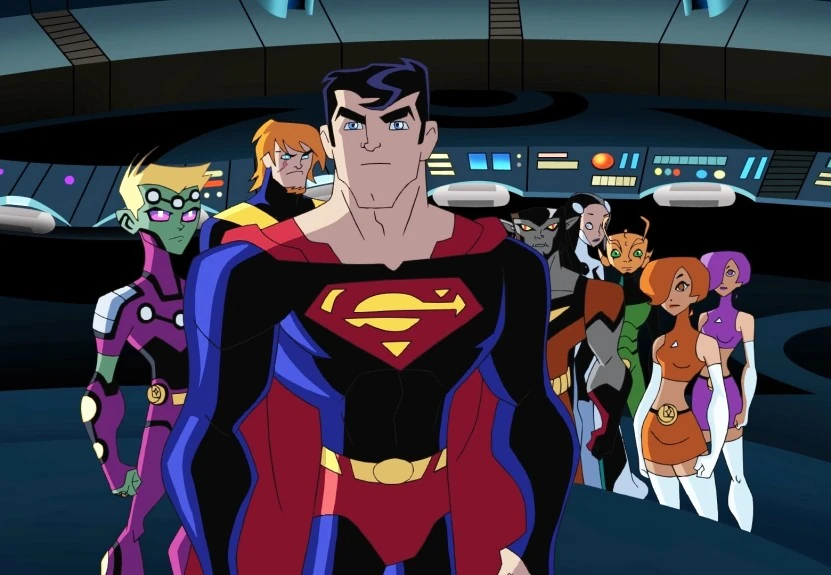
The Legion is a team of superheros from roughly ten centuries in the future.  They first appeared in the present to induct Superboy (young Superman, not young clone of Superman) into their team.  They quickly became a staple of Clark Kent's early heroic career.  Supergirl also joined the Legion and developed  romantic ties to fellow member Brainiac 5, a descendant of the iconic Superman villain Brainiac.

The green and purple one is Brainiac.  Why?  What color is your evil robot
villain's great great great great great grandson who has hair for some reason?

Jonah Hex

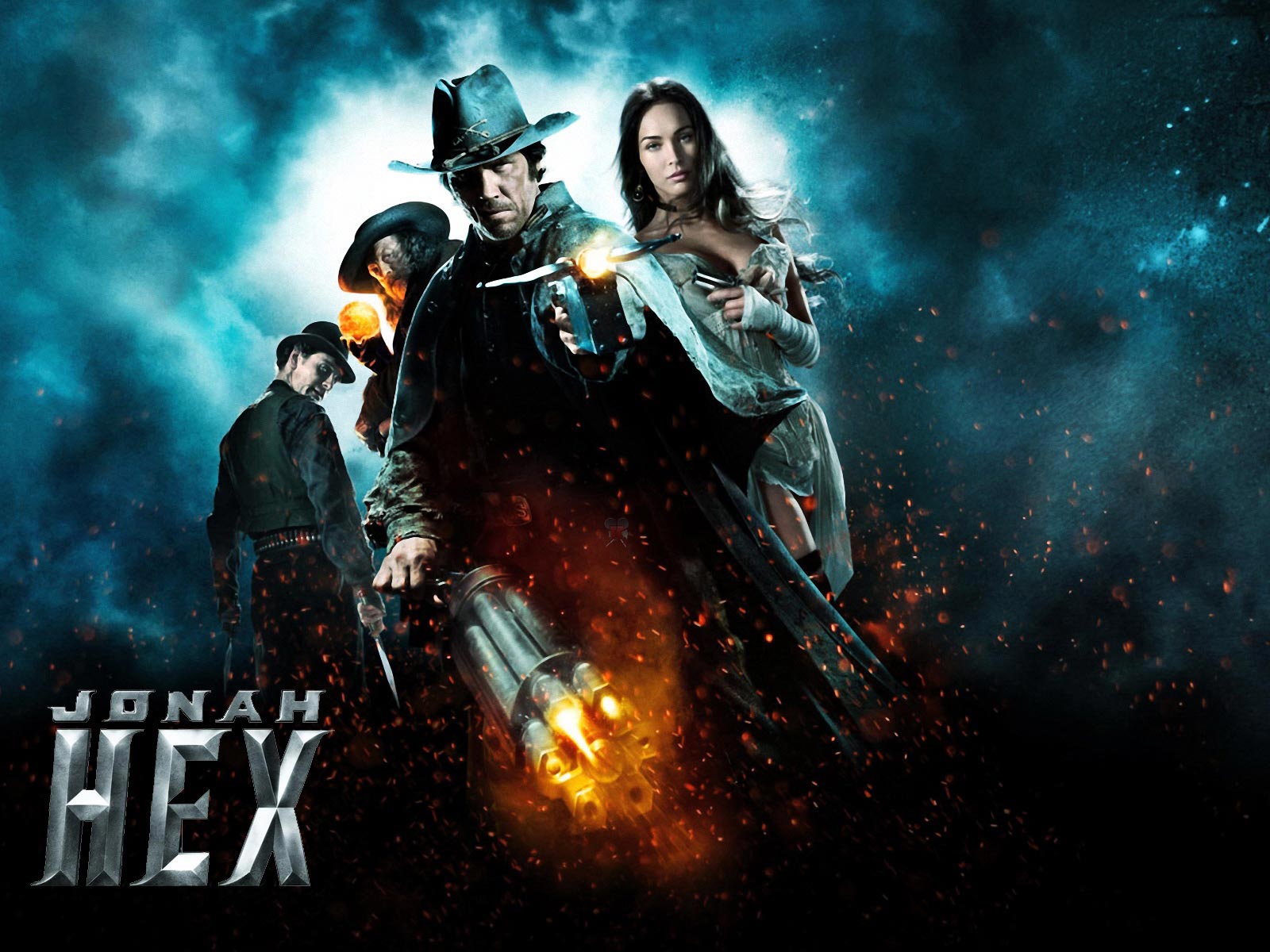
Since Legends apparently involves quite a bit of time travel it should allow for some run ins with characters from throughout DC's history, which includes the westerns that featured the likes of charming and stylish Bat Lash, the musical Minstrel Maverick, and most famously the scarred bounty hunter known as Jonah Hex.

What could possibly go wrong with a live action Jonah Hex?

Wonder Woman

It's going to be at least a couple of years before Wonder Woman gets her own movie (which is still at least a couple decades too late) so it would be great to see Princess Diana of Themyscira back on the small screen where she made her mark as played by Lynda Carter in the 70's.  It might be good for Supergirl to interact with an established female hero as she lives in Superman's shadow.  Even if Wonder Woman herself doesn't show up the Legends could possibly swing by ancient Greece and visit the Amazons on Paradise Island, or at least White Canary and Hawkgirl could while the men play Candy Crush and charge their phones on The Atom's suit.

Already a better western than Jonah Hex.

The Super Pets

A dog is man's best friend, which is why Krypto the Superdog has become such an endearing part of the Superman mythos.  Supergirl has a pet of her own, a cat named Streaky who gains powers by playing with a special ball of yarn.  The "adorkable" Supergirl we've seen so far definitely seems like she would have a cat, but a Krypto appearance would also be fun.  However, neither would be as much fun as Comet the Superhorse.

Fun!  Not creepy!

Scandal Savage

The main villain of Legends of Tomorrow is going to be the immortal Vandal Savage.  Being immortal, Vandal has no doubt procreated on more than one occasion.  His most notable offspring is Scandal Savage, a member of the anti-hero/villain team Secret Six.  Scandal has a lot in common with Nyssa Al Ghul, who was a major player in the third season of Arrow and the battle against her father, the nigh immortal R'as.  Scandal could also be a valuable ally as the Legends fight Vandal.

Nothing snarky to say about Scandal but
I do want to apologize for Jonah Hex.
I haven't even seen that movie.

Jerro

I'm most familiar with Supergirl from her early years in the 60's.  It was a very strange time for comic books and perhaps Supergirl more than most.  Superman forced her to live in an orphanage and resist adoption until she proved herself, she had an android duplicate of herself that she kept in a tree, and as previously mentioned she had a Supercat and Superhorse.  One of my favorite aspects of this time for Supergirl is her courtship with Jerro.  Jerro is a merman and an associate of Lori Lemaris, a mermaid who dated Superman.  He's a merman, his name is Jerro, and he loves Supergirl.  If that's not good TV I don't know what is.

Have some dignity Jerro.  Clinginess is not
befitting of the noble merman.

Friday, May 8, 2015

9 Characters Who Should Be In DC's Legends of Tomorrow

Yesterday CW finally announced the name of their Arrow/Flash spin-off.  DC's Legends of Tomorrow will feature a large cast of time traveling characters including those already seen on its parent shows like Brandon Routh's Ray Palmer (Atom) and Wentworth Miller's Leonard Snart (Captain Cold) as well as new characters Rip Hunter and Hawkgirl as played by Arthur Darvill and Ciara Renee respectively.  The new show's line up is already pretty stuffed but I think there's room for a little more.

1. Static Shock


Static, alias Virgil Hawkins, is best remembered for his cartoon that ran for four seasons in the early 00's.  Static was originally created by Milestone Media in 1993 but was owned by DC, allowing his cartoon to cross over with Batman , Superman, and Justice League.  In 2008 he officially joined the DC comics universe.  He was last seen on the pages in a 2011 series as part of the New 52 reboot but it was cancelled after 8 issues.  Most recently Static appeared in the final season of the Young Justice cartoon.

Static's appeal has been compared to the early days of Spider-Man.  He's a normal nerdy teenager blessed/cursed with amazing powers after an accident and a great since of humor since birth.  The comparison has been noted by the character's creator Dwayne McDuffie who named Spidey as an influence.  

The original Static comic book and the animated series, both created by McDuffie, were critically and commercially successful but the character hasn't been able to find a steady foothold since.  He will get another chance in the upcoming live action web series by WB.  It was announced last fall but nothing has been said about it since.  Based on the little information available I can't imagine any reason the series couldn't cross over with Legends of Tomorrow.  Static's snark would certainly fit in well with the lighthearted atmosphere of The Flash and he would probably get along with Arrow's boyish rich genius pseudo-Iron-Man Ray Palmer, who will be in the new series.

2. Mr. Mxyzptlk


Legends of Tomorrow already features a couple of villains in Captain Cold and Heatwave but they're a little underrepresented.  A great addition could be a classic Superman foe, specifically the malicious imp Mr. Mxyzptlk from the 5th dimension.  The Unpronounceable One is nearly omnipotent and completely unpredictable.  Ideally, Mr. Mxyzptlk would be played by his voice actor from Superman: The Animated Series, the one and only Gilbert Gottfried.  Featuring a live action Mr. Mxyzptlk and staying true to his absurdist roots would be risky but if anyone can pull it off it's the people who put a psychic gorilla in The Flash.

3-9.  All Static Shock again


He's really great.

Sunday, May 3, 2015

'Avengers: Age of Ultron' Review: If That's What You Want to Call It


Age of Ultron might be one of the most thematically interesting superhero movies I've ever seen.  It's also one of the most unapologetically comic booky.  In that regard both Avengers films are in a league of their own.  Unfortunately, Age of Ultron fails to match it's predecessor as a source of excitement, but that's to be expected.  The Avengers was the first of its kind and its sequel is by necessity the second.

Director Joss Whedon was well aware of the pressures of following up The Avengers and his fears may have found their way into the film.  It begins with the team retrieving the scepter Loki used as the villain of the first movie from Hydra.  Most, if not all, of the team sees it as closure and they celebrate with a party.  Once all the guests have left the team sits in a circle and basks in their victory.  That's when Ultron strikes.  Ultron, a Frankensteinian monster of Tony Stark's creation, makes his first move while the Avengers celebrate their accomplishments.  I probably shouldn't put words in Whedon's mouth but I don't think anyone could blame him for fearing self sabotage.

I also have a theory that Thanos's hunt for the Infinity Gems
is a metaphor for Kevin Feige's quest to recover Marvel movie rights
but it's gonna take a few years to flesh that one out.
The metaphors in Age of Ultron are by no means restricted to the world inside of Joss Whedon's head.  This movie represents the rapidly changing world we live in like no other has.  Ultron is motivated by a desire to force the world to evolve.  In order to do so the machine regularly attempts to update himself.  Towards the end of the movie we see a new, larger version of Ultron tear apart the older version and take his place in mid-sentence.  When Tony Stark sees the bigger and badder Ultron he stares up in awe, taken aback in a rare moment of speechlessness.  Interestingly, in another case of self sabotage, Ultron's attempts to improve lead to the creation of The Vision, who ultimately deals the killing blow to the evil robot.

Despite featuring Thor as a main character, in Age of Ultron Norse mythology takes a backseat to the Greeks.  Two Greek legends have massive influence on the movie: Oedipus and Prometheus.  Oedipus is most famous for killing his father and marrying his mother.  The first part is what's most important in this case.  Ultron kind of created Vision, who proved his undoing, when Ultron's aim in creating Vision was to destroy humanity, including his "father" Tony Stark.  Of course, Tony didn't give birth to Ultron through traditional Sex-Ed 101 methods.  That brings us to Prometheus.  Prometheus is a Titan most famous for giving fire to the people.  That is often translated into creating life.  As previously mentioned, Tony's creation of Ultron is similar to Frankenstein, which is another story that is quite Promethean.  The connection to Frankenstein is even more obvious in the creation of Vision.  After taking the bulk of Vision from Ultron Tony tries to finish it by implanting his software butler Jarvis and turning Ultron's creation into a force for good.  The process is interrupted by the other Avengers, but then Thor finishes it by striking Vision with lightning, paralleling the lightning used to create Frankenstein's monster.

Thor helping create Vision plays into the theme of teamwork that's inevitable in a movie like this.  The decision to create Ultron was made entirely by Stark and Bruce Banner just went along with it, presumably because he generally tries to avoid conflict.  When Tony is defending his decision he asks how else anyone expected them to protect the world.  Steve Rogers replies "together."  The decision to create Vision was made by Tony and Thor separately, but it was still closer to resembling teamwork than Ultron's birth, and that teamwork created a good robot to oppose the evil one.  In the climactic final battle Ultron asks how the Avengers can defeat him and Tony says "Like the old man said, 'together.'"

When the battle is over and Tony Stark has learned the meaning of teamwork he apparently quits the team and in a year he will return to fight Steve in Captain America: Civil War.  He's not the only one who leaves.  Thor also departs so he can find out what Thanos is up to and who the hell knows what Hawkeye is doing.  That paves the way for the movie to end with the introduction of a new team made up of Tony's friend War Machine, Vision, Scarlet Witch, and Steve's friend Falcon along with Steve himself and Black Widow.  The last scene is a nice homage to a classic comic book Avengers moment and a good way to bring it back to the theme of change.  If there's one thing you can say about Age of Ultron it's that things change.


Previously:


Iron Man

The Incredible Hulk

Iron Man 2

Thor

Captain America: The First Avenger

The Avengers

Iron Man 3

Thor: The Dark World

Captain America: The Winter Soldier

Guardians of the Galaxy